
Bruce Scholten
CTO at Moleaer Inc
Scaling water systems using nanobubble technology
Bruce Scholten is the Chief Technology Officer of Moleaer Inc., a global leader in nanobubble technology. He focuses on scaling solutions that make water. agriculture, and industrial systems more efficient, productive and sustainable.He writes about systems thinking, technology and the future of infrastructure, exploring how incremental innovations can reshape large complex systems.Based in Los Angeles, California
Ai, Systems, and the Future of Search

AI is changing how people search for information. More users are moving away from traditional search engines like Google and toward direct answers from AI systems. Instead of browsing links, they ask a question and receive a response.That shift is real, but it is often misunderstood.Google helped us find information. We still had to interpret it, compare sources, and decide what to do next. That friction slowed things down, but it also forced a level of thinking.AI removes much of that friction. It summarizes, filters, ranks, and increasingly recommends. In some cases, it will act. The center of gravity is moving from finding information to making decisions.That is a fundamental change.You can already see it across industries. Procurement teams are using AI to evaluate suppliers. Marketing teams are letting it allocate budget. Finance teams are using it to flag risk and suggest actions. These are not small tasks. These are decisions that used to sit with experienced people.It is tempting to assume this leads to better outcomes. Faster decisions, better results.But there is a constraint that does not go away.AI does not change the underlying system.It does not create more water. It does not rebuild soil. It does not produce energy or move materials. It operates on top of those systems, not inside them. What it can do is make us move faster within those constraints, and that is where this becomes interesting.If the system is sound, AI can be a force multiplier. It can reduce waste, improve timing, and help allocate resources more intelligently.If the system is flawed, speed amplifies the problem. Faster decisions do not fix a broken supply chain. Better recommendations do not change poor inputs. You simply arrive at the outcome faster.Replacing Google is not the story. The real shift is that we are moving from searching for answers to accepting them. That changes more than how we interact with information. It changes how decisions are made.That requires a different kind of thinking.It means understanding not just what the answer is, but what system it sits inside. It means asking where the constraints are, what assumptions are being made, and whether the underlying problem is actually being solved.It also raises a more difficult question. Do we trust the machine, or the people who built it?Every system has incentives behind it. Google had ads, rankings, and SEO shaping what you saw. AI will have its own version of that, even if it feels cleaner on the surface.That is the agency problem.The model is answering your question, but it is shaped by the data it was trained on, the objectives it was given, and the constraints set by the people who built it. Accepting an answer means trusting that entire system.In the real world, in water, in agriculture, in energy, these are not information problems. They are physical systems with limits. You can model them, optimize them, and manage them better, but you cannot remove those limits.AI will change how we interact with those systems. It will not change the fact that they exist.So yes, AI is starting to replace Google. It will change how we search, how we learn, and how we make decisions.It will not replace physics, and in the long run, that is the constraint that matters.Further reading
Selected writing on water, systems, and technology
View nanobubble images and lab work: https://brucescholten.com/#media
About the authorBruce Scholten is CTO at Moleaer, focused on scaling nanobubble technology across water, agriculture, and industrial systems. He writes about systems thinking, infrastructure, and the future of applied technology.
https://replit.com/refer/brucescholten63 Link to Replit for building a bot if you want to try it out.
Selected Writing on Water, Systems, and Technology
Why We Follow The People We Like
A short reflection on why trust and relatability often matter more than raw intelligence in how ideas spread.
.
What a Pop Up Wetland Teaches About Systems and Cycles
A story about a temporary wetland in Los Angeles, and what it reveals about resilience, infrastructure, and how natural systems adapt over time.
.
Intelligence Is Becoming a Utility, That Changes Everything.
Exploring how intelligence is shifting from something scarce to something on demand, and what that means for systems, business, and the future.
.
Featured Profiles and Publications
Bruce Scholten’s work and background can also be found on:
Nanobubble Images and Media
Selected nanobubble, lab and field images available for reference and reuse with credit
Images may be used for educational or editorial purposes with attribution to Bruce Scholten
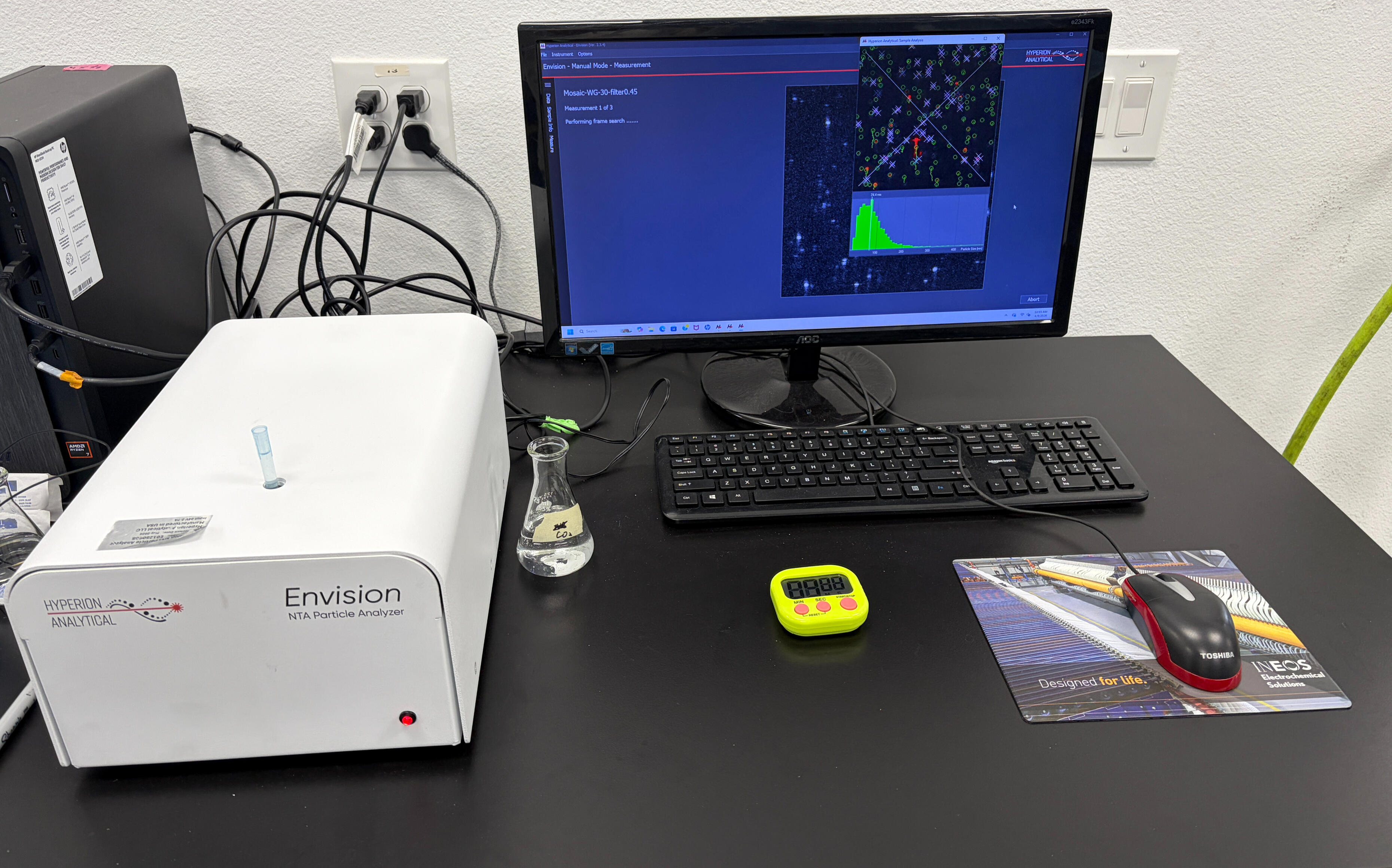
Envision NTA particle analyzer running a nanobubble measurement test, providing size distribution and concentration data to support lab validation and comparison across different generation methods.
.
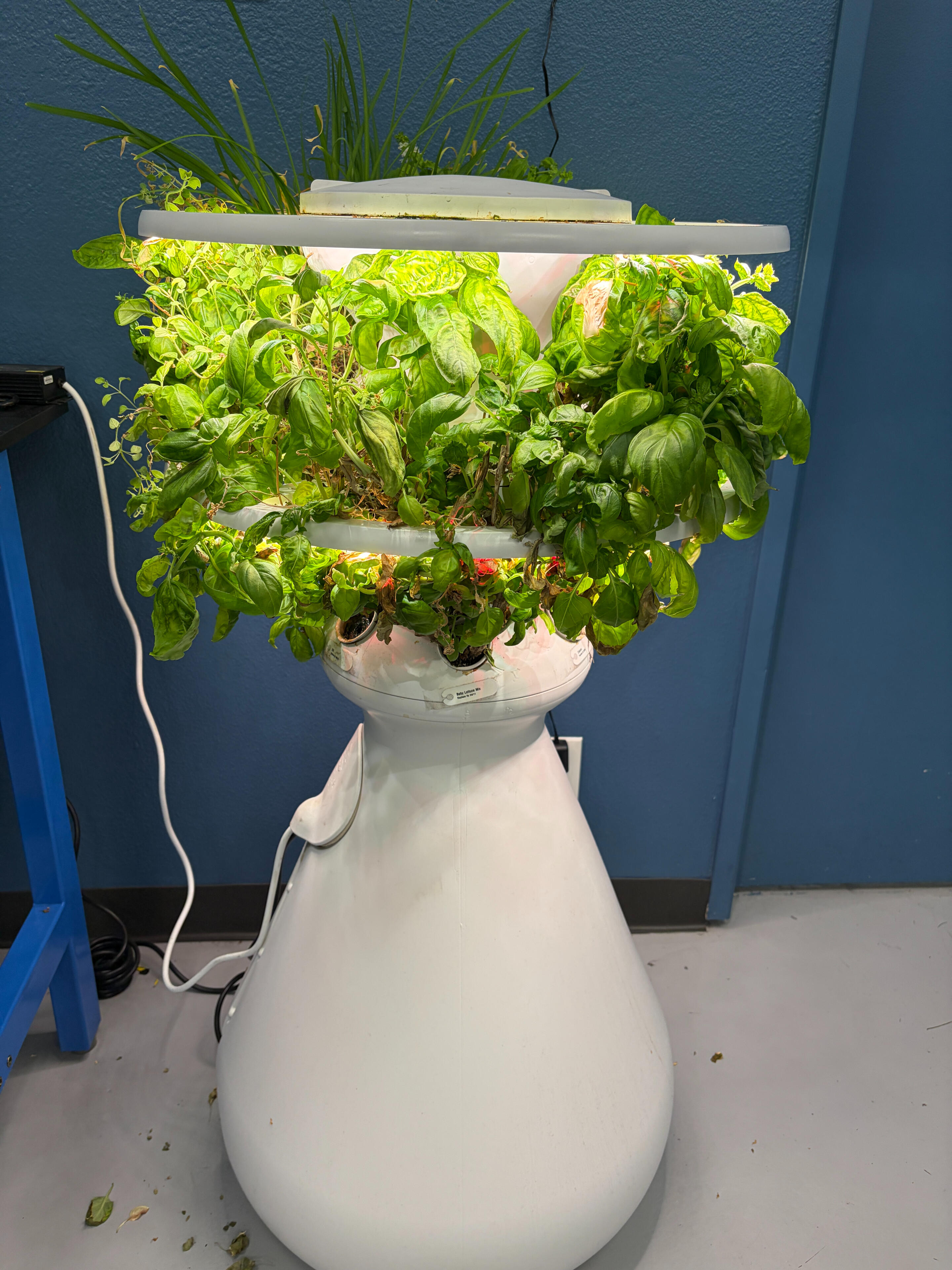
Hydroponic Lettuce Growth in Controlled Lab System
Small-scale hydroponic system used to observe plant response under controlled water and oxygen conditions.
.
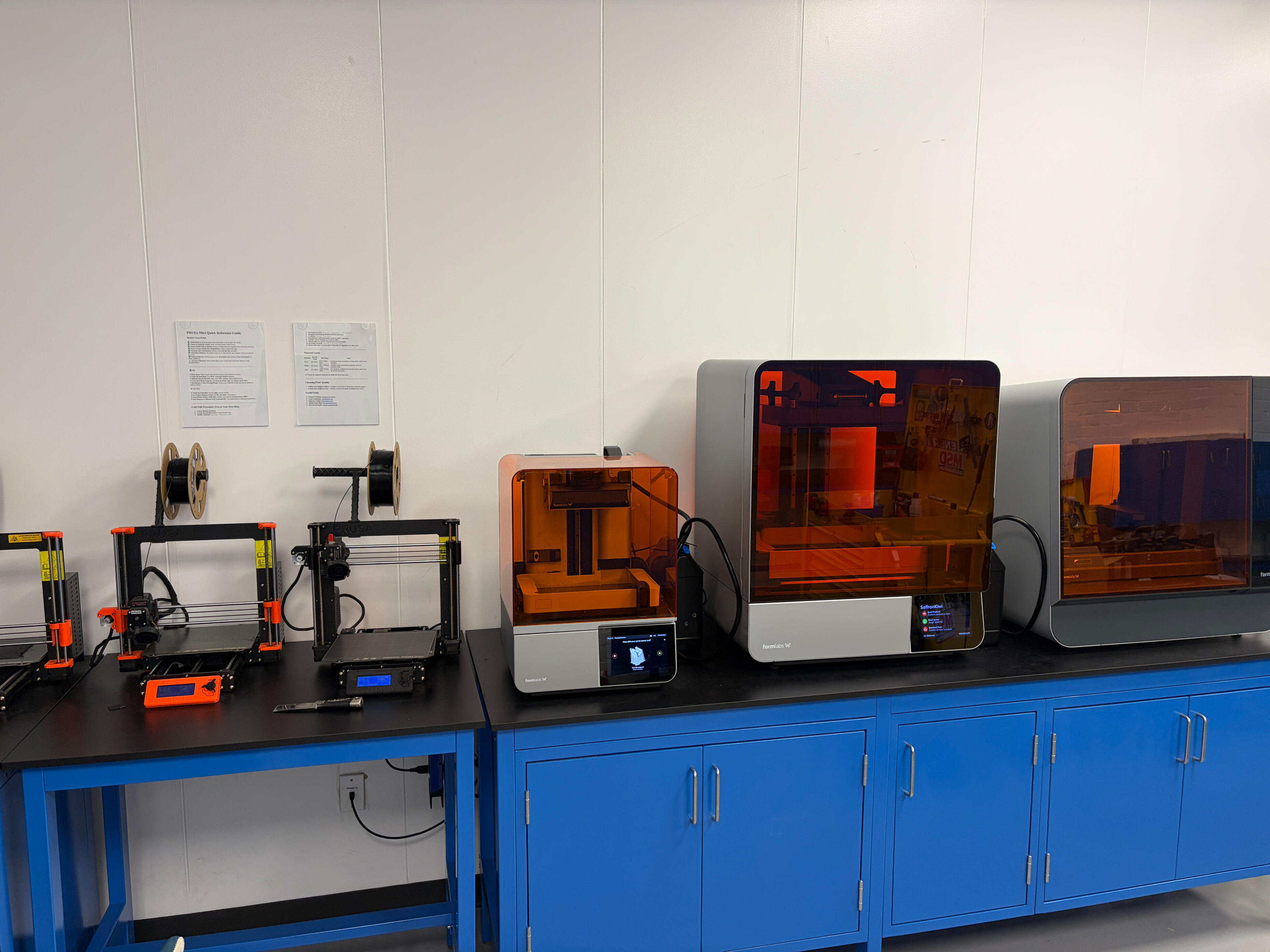
In-house 3D printing setup used to rapidly prototype and test components for water and nanobubble system development.
.

Coastal discharge environment at Hyperion Wastewater Treatment Plant, representing large-scale water treatment and ocean outfall systems.
.
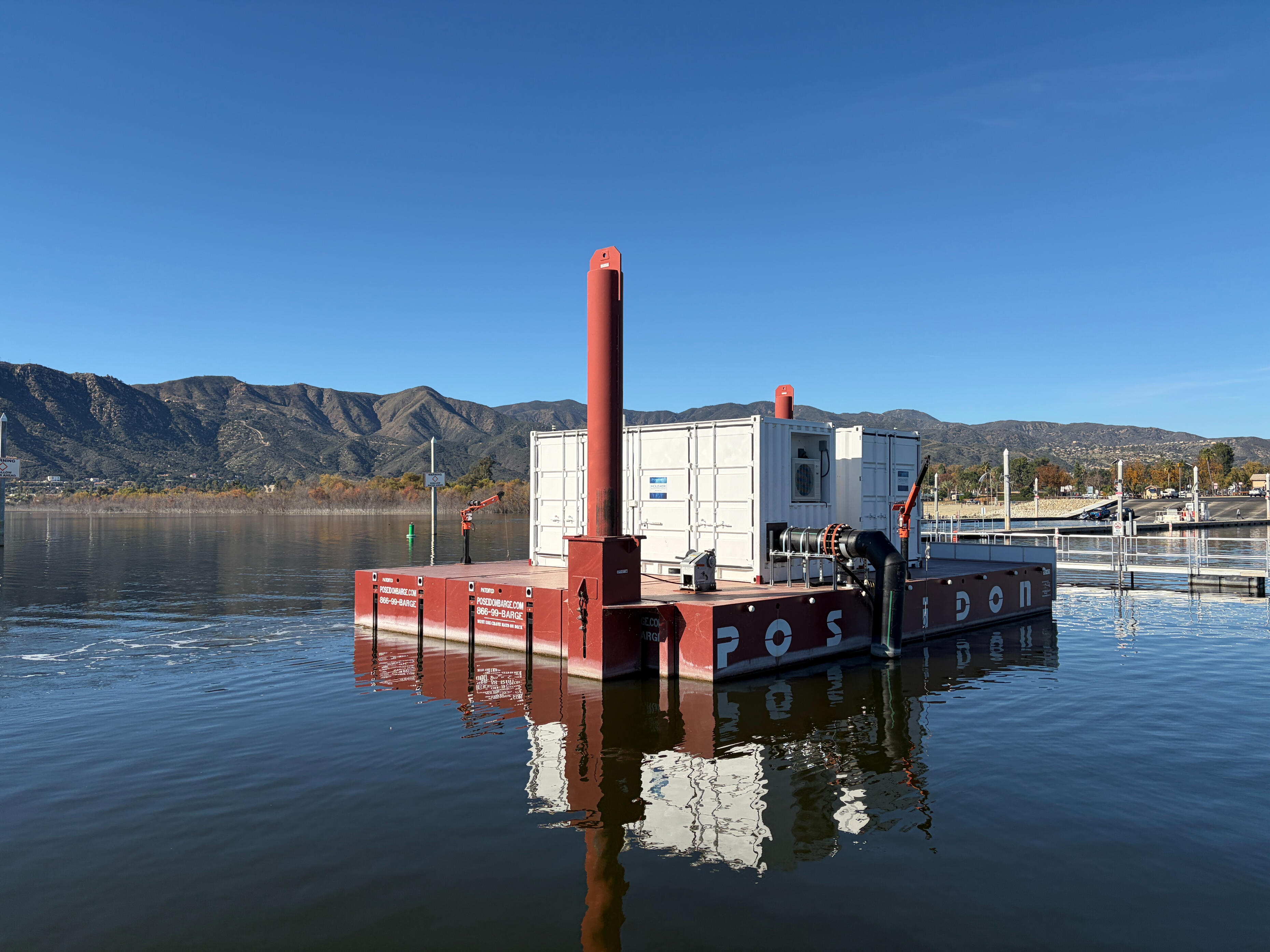
Floating nanobubble generation system deployed for in-situ water treatment, demonstrating scalable oxygen transfer in lakes and reservoirs.
.
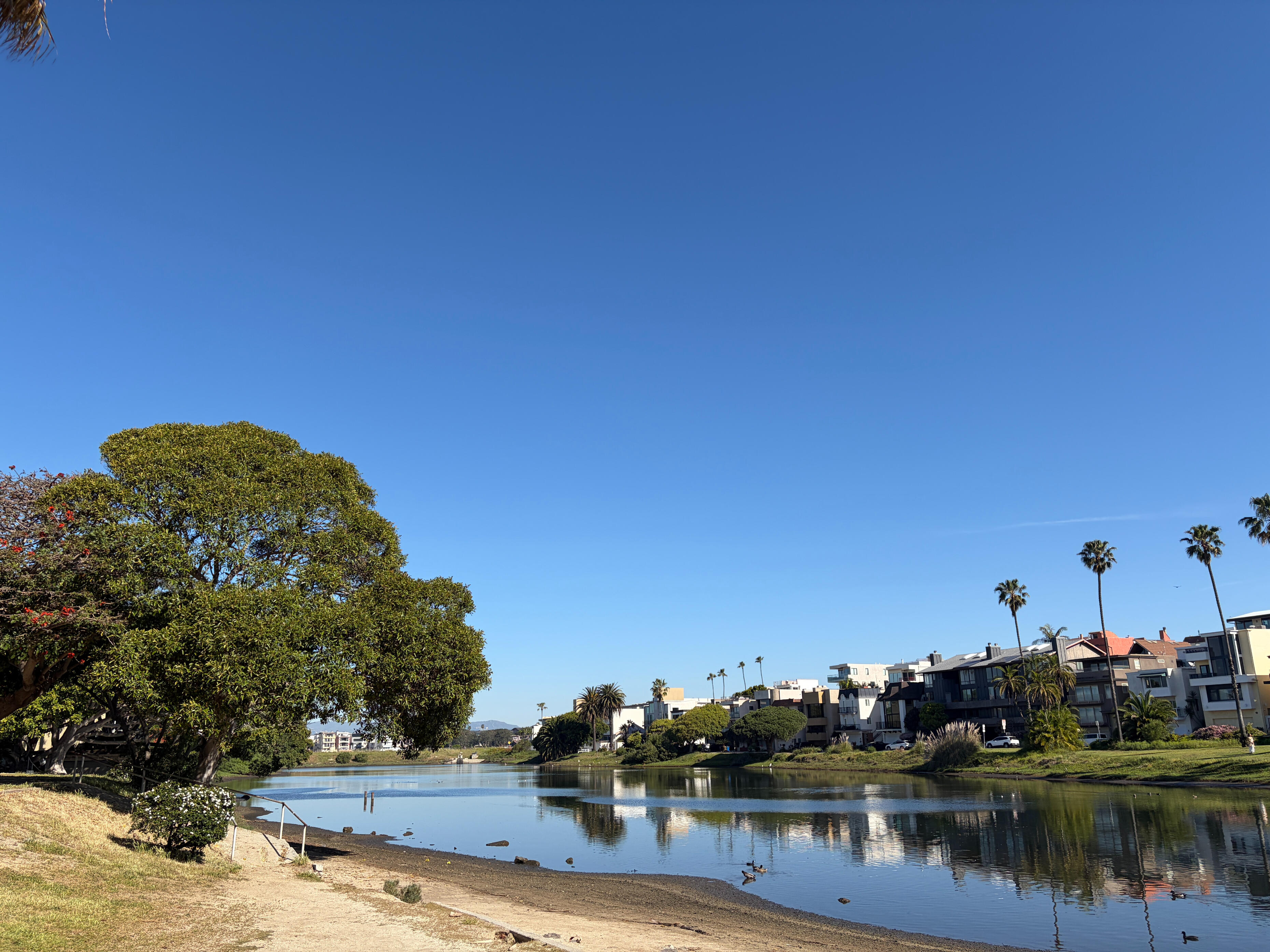
A calm section of the Ballona Estuary in Los Angeles, where residential development sits alongside a protected coastal wetland system, reflecting the balance between urban life and natural waterways.
.

A reflective view of the Ballona Estuary lagoon in Los Angeles, showing palm-lined residential development alongside calm urban water, highlighting the interaction between built environments and natural systems.
.
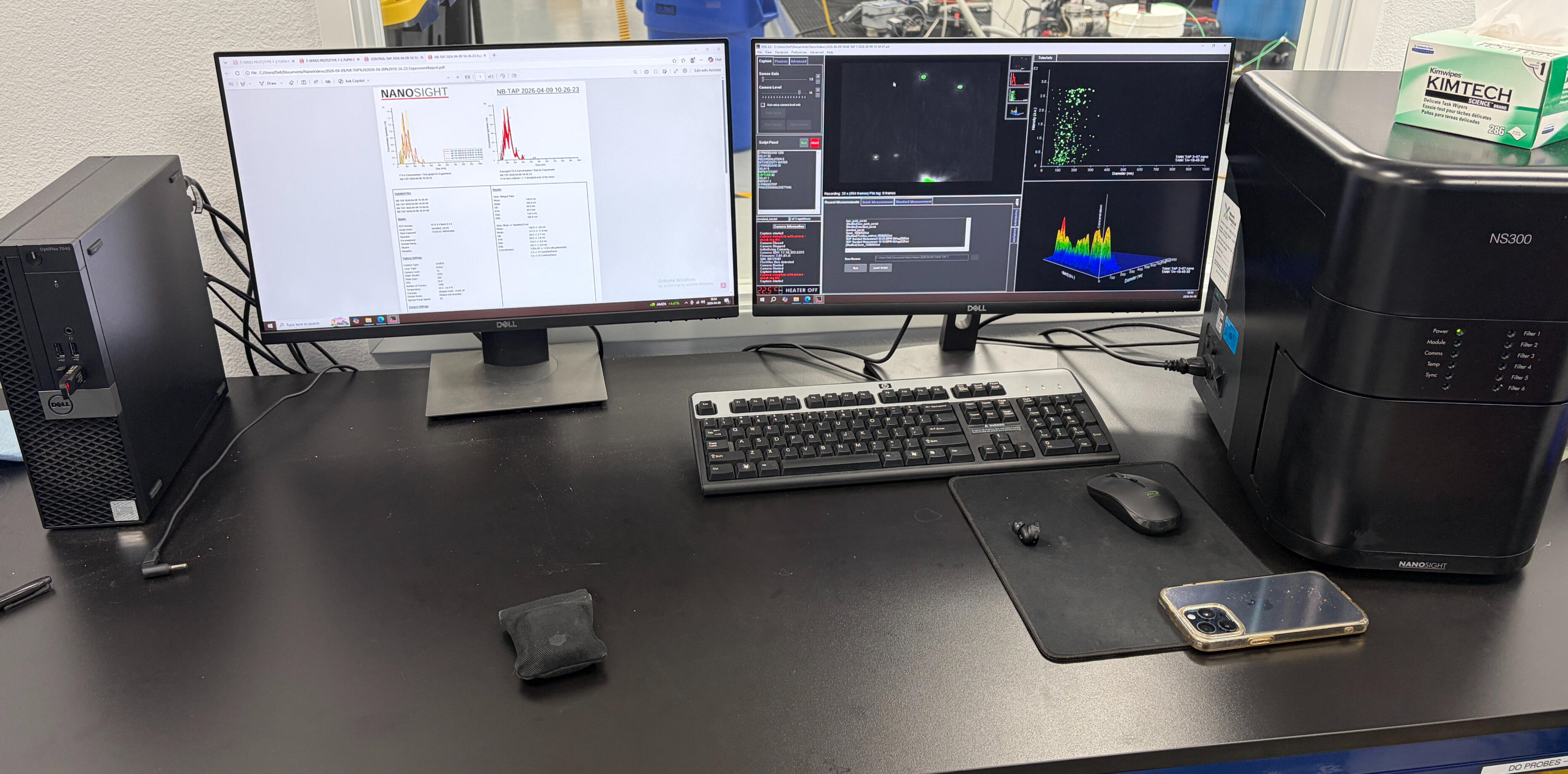
Real-time nanobubble measurement using a Nanosight NS300 system, capturing particle size distribution and concentration through nanoparticle tracking analysis. This setup is used to verify nanobubble generation performance under controlled test conditions.
.
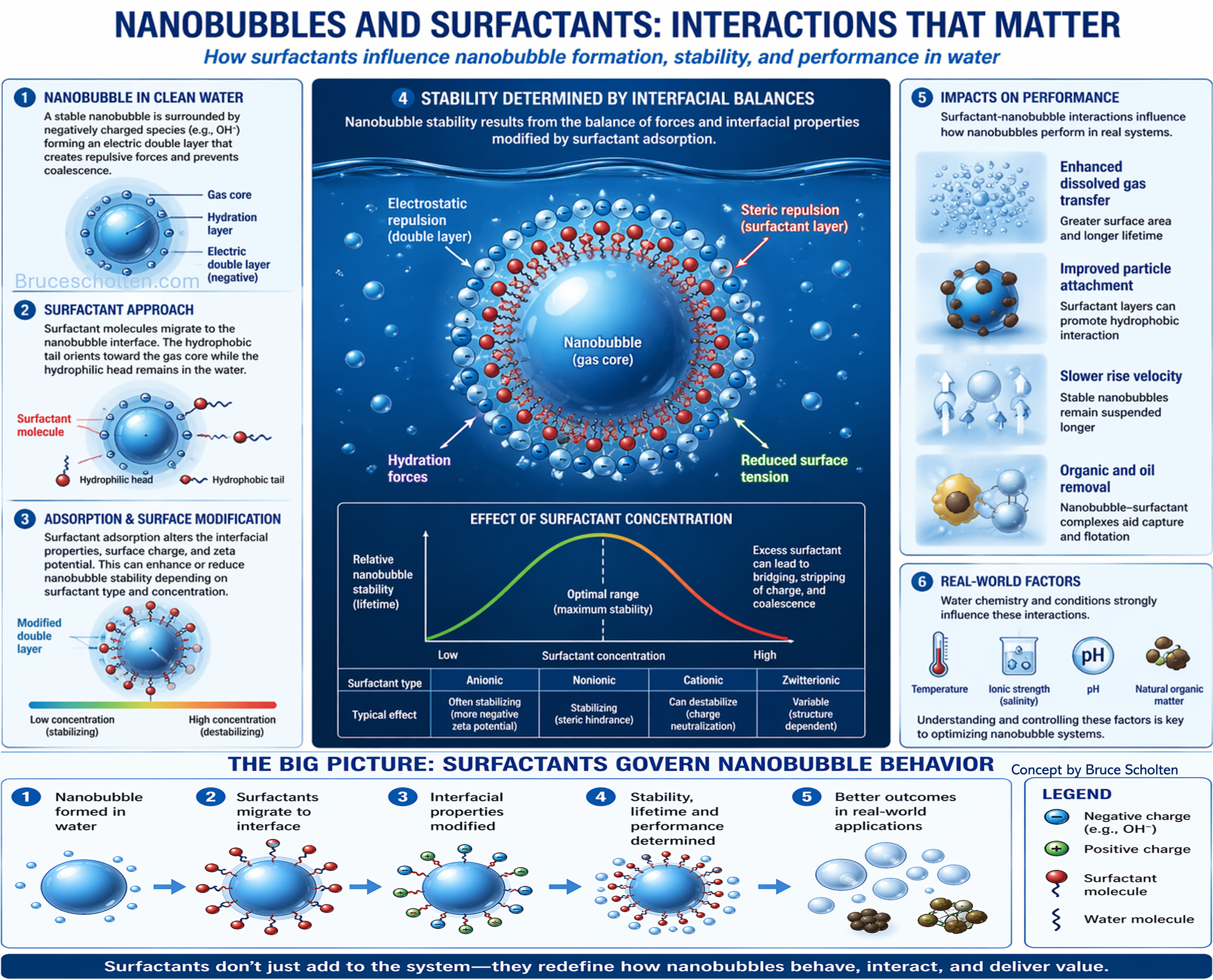
Surface interactions that drive cleaner, more stable water systems
Feel free to use any of the images, please Credit: Bruce Scholten, brucescholten.com
Technical References and Engineering Documents
Selected engineering specifications, standards, and technical reference materials related to water systems, infrastructure, and applied engineering.
Victaulic 25.11 Groove Specifications for PVC and CPVC PipeReference dimensions and tolerances for grooved mechanical piping systems used in water and industrial applications.
.
What Are Nanobubbles and Why Do They Matter
Nanobubbles are gas bubbles typically less than 200 nanometers in diameter that remain suspended in water rather than rising to the surface. This behavior allows them to deliver gases like oxygen more efficiently in water systems used in agriculture, wastewater treatment, and environmental restoration.This difference in behavior is what makes them interesting.
What are Nanobubbles?
Nanobubbles are gas bubbles that exist at the nanometer scale, meaning they are thousands of times smaller than a typical visible bubble. At this size, the forces acting on them change. Buoyancy becomes negligible, and instead of rising, nanobubbles remain suspended in liquid.Because of their small size, nanobubbles have a very high surface area relative to their volume. This allows them to interact more effectively with the surrounding water and any dissolved substances.
Why Nanobubbles Behave Differently
At larger scales, bubbles rise because buoyancy dominates. At the nanoscale, different forces take over.Brownian motion, which is the random movement of particles in a fluid, becomes significant. At the same time, surface charge effects stabilize the bubble interface, preventing immediate coalescence or collapse.Instead of rising and dissipating, nanobubbles can persist in water for extended periods and distribute throughout the system.
Why Oxygen Transfer Matters
In many natural and engineered systems, oxygen is a limiting factor.In water treatment, biological processes depend on dissolved oxygen. In agriculture, root health and nutrient uptake are closely tied to oxygen availability. In natural water bodies, oxygen levels influence everything from microbial activity to ecosystem balance.Nanobubbles provide a way to deliver gases like oxygen more efficiently into water. Because they remain suspended and distribute throughout the volume, they can improve oxygen availability where it is needed most.
Where Nanobubbles Are Used
Nanobubbles are being applied across a range of systems where gas transfer and water quality matter.In agriculture, they are used to improve root zone conditions in hydroponic and irrigation systems. In wastewater treatment, they support biological processes. In surface water and lakes, they are used to help restore aerobic conditions in lake bottoms and improve overall water quality.These applications are not about the bubbles themselves, but about how they change the behavior of the system.
A Systems Perspective
What makes nanobubbles interesting is not just their size, but how they change system dynamics.Instead of delivering gas in bursts that quickly escape, nanobubbles allow gas to be distributed more evenly and persistently. This shifts systems toward more stable and efficient operating conditions.In many cases, the benefit is not a single dramatic effect, but a steady improvement across multiple variables, including oxygen levels, biological activity, and overall system performance.
Nanobubbles are often described in terms of their physics, but their real impact is practical. They allow water systems to operate more efficiently, often using less energy, fewer chemicals, and more stable biological processes.